


Personalized Cleanser
A gentle wash with exfoliating and toning properties — calibrated to your skin.

Summer is quickly approaching, but instead of being excited to embrace the beautiful weather, you're panicking about unsightly dark spots on your legs.
Summer is quickly approaching, but instead of being excited to embrace the beautiful weather, you’re panicking about unsightly dark spots on your legs. This issue can be easy to ignore during the winter but quickly cause insecurities as the weather improves and the shorts and sundresses enter your regular rotation.
So, instead of hiding your legs all summer long as a result of dark spots, you can learn what’s causing them and effectively treat them so that you can rock your favorite outfit without a second thought.
Dark spots are areas of hyperpigmentation where your skin has produced an excess amount of melanin, which is a colored protein that provides pigment to our skin, hair, and eyes. Excess melanin production in these areas can give them a darker appearance that doesn’t match with the rest of your skin tone.
The exact appearance of dark spots varies depending on your current skin tone and the underlying cause of the dark spots. For example, dark spots may appear differently on those with darker skin. Dark spots caused by sun damage will often look different than dark spots caused by post-inflammatory hyperpigmentation.
It’s totally normal to wonder where that unfamiliar dark spot on your leg came from. That being said, it can be quite difficult to pinpoint the exact cause.
Here are some common causes of dark spots on legs:
Sun damage is one of the leading causes of dark spots appearing on your legs. In fact, sun damage could be causing dark spots on other parts of your body as well. This is especially true if you’re not exactly conscious about your sun protection. Dark spots occur as the sun stimulates the production of melanin in the skin, which can either lead to a nice tan or pesky dark spots.
If you’re experiencing dark spots on your legs after an injury or a bad bout of acne, then it’s likely related to post-inflammatory hyperpigmentation. Your skin’s healing and inflammatory responses can result in an increased production of melanin in the skin, leading to dark spots that tend to heal and lighten over time.
People diagnosed with diabetes may develop brown spots on their lower legs. These spots are known as diabetic dermopathy and typically have a light brown appearance around the shins. Even if you haven’t been diagnosed with diabetes, these dark spots could be a sign that you’re prediabetic.
Melanoma is a type of skin cancer that tends to develop on the legs of women. Melanomas may have an irregular shape, be multicolored, itch, bleed, and change in size, shape, and color.
These lesions are an early sign of skin cancer and typically appear as raised, scaly red lesions on areas that are frequently exposed to the sun without adequate protection -- like the legs. They should be removed quickly for the best prognosis.
Brown spots on the legs, especially near the ankle, could be an early sign of venous insufficiency. This is a vein condition that occurs as a result of blood valves becoming weakened or damaged, leading to the pooling of blood in the lower leg. Other symptoms of venous insufficiency include leg heaviness, leg pain, leg swelling, muscle cramps, and ulcers. This condition should be treated by a specialist to prevent future issues and restore a more even skin tone to the leg area.
While some dark spots that appear on your legs could be totally harmless and nothing to worry about, that’s not always the case. For this reason, we generally recommend mentioning any areas of concern to your doctor during your next checkup. After all, you’re better off safe than sorry!
There are some instances when you should be more concerned about dark spots appearing on your legs and schedule an appointment to see your doctor right away for a proper check and diagnosis.
Here are some signs to look out for:
Just because your dark spots aren’t a sign of something that needs to be removed doesn’t mean that you’re stuck with them forever. In fact, there are tons of different treatment options out there that can help remove dark spots from legs that are caused by sun damage and other factors.
Explore some of these different treatment options and speak with your doctor to come up with the best possible treatment plan for your unique situation:
Topical skin treatments for dark spots on legs are available either over-the-counter or by prescription. While prescription products may be slightly more effective, over-the-counter products are a cost-effective option that still contain powerful ingredients that can help you lighten dark spots. Take PROVEN Skincare, for example. PROVEN uses custom formulas to develop products that are specifically tailored for your unique skin. If you list dark spots as an area of concern on your Skin Genome Quiz, we will formulate your products with lightening and brightening ingredients like niacinamide, vitamin C, soy, kojic acid, arbutin, and licorice extract.
If you have a lot of dark spots on your legs that you’re eager to get rid of, you may want to consider laser skin treatments. This cosmetic treatment uses lasers to remove the top layers of skin and heat the lower layers. As a result, the appearance of your dark spots will diminish over the course of several treatments. While this option is certainly effective, it’s also expensive and requires multiple different treatments to achieve the best results.
If heat isn’t your thing, you could try cooling through cryotherapy. This cosmetic procedure freezes dark spots on your skin with liquid nitrogen to injure the affected cells and promote a healing process that can lead to lighter skin cells taking the place of the darker ones.
This cosmetic procedure utilizes a special tool to exfoliate and remove the top layer of your skin to help get rid of imperfections like sun spots and scars. This is a non-invasive yet effective treatment for these pesky marks that appear on the legs.
Another exfoliating treatment for dark spots on legs involves the use of chemical peels. This process is performed by a skincare professional and there are many different treatment options to choose from based on your skin concerns. We recommend going with peels that feature powerful ingredients like alpha hydroxy acids, beta hydroxy acids, and trichloroacetic acids. Chemical peels can also help you treat other skin concerns, including dull skin, acne, and scarring.
While you may not be able to completely prevent dark spots from appearing on your legs, there are some steps that you can take to reduce the likelihood that they occur and prevent them from getting worse.
One of the best things you can do to prevent dark spots on your legs is to prioritize sun protection on a consistent basis. While you may not be able to completely turn back the clock to make up for all those times you didn’t wear sunscreen on your legs when you were younger, it’s never too late to start taking care of your skin. It’s recommended that you use a product with an SPF of at least 30 each and every day -- regardless of the weather or your outdoor plans.
We understand that you’re not too keen on applying the thick, oily, and white sunscreen that you’re used to -- which is why we at PROVEN have created a moisturizer that includes SPF 40 so you don’t have to worry about remembering an extra step or dealing with sticky sunscreen.
In addition to moisturizing, other skincare steps can go a long way towards preventing and minimizing the appearance of dark spots on legs. For example, your PROVEN skincare regimen will also include a cleanser that effectively cleanses and exfoliates your skin to keep it clean, healthy, and free of impurities. The regimen also includes a night cream for a complete skincare experience involving just three products.
Concerns, lifestyle, climate, and sleep — all covered in your formula.
Updates with your skin, life, and seasons. Every reorder.
Independent clinical study — brighter, more radiant skin.
By Stanford scientists. 28M data points behind every formula.
100K+ personalized formulas served. 30-day money-back guarantee.
A cleanser, day moisturizer, and night cream — calibrated to your skin from the 3-step Skin Genome Quiz.
A gentle wash with exfoliating and toning properties — calibrated to your skin.

Lightweight daytime hydration — formulated for your skin.
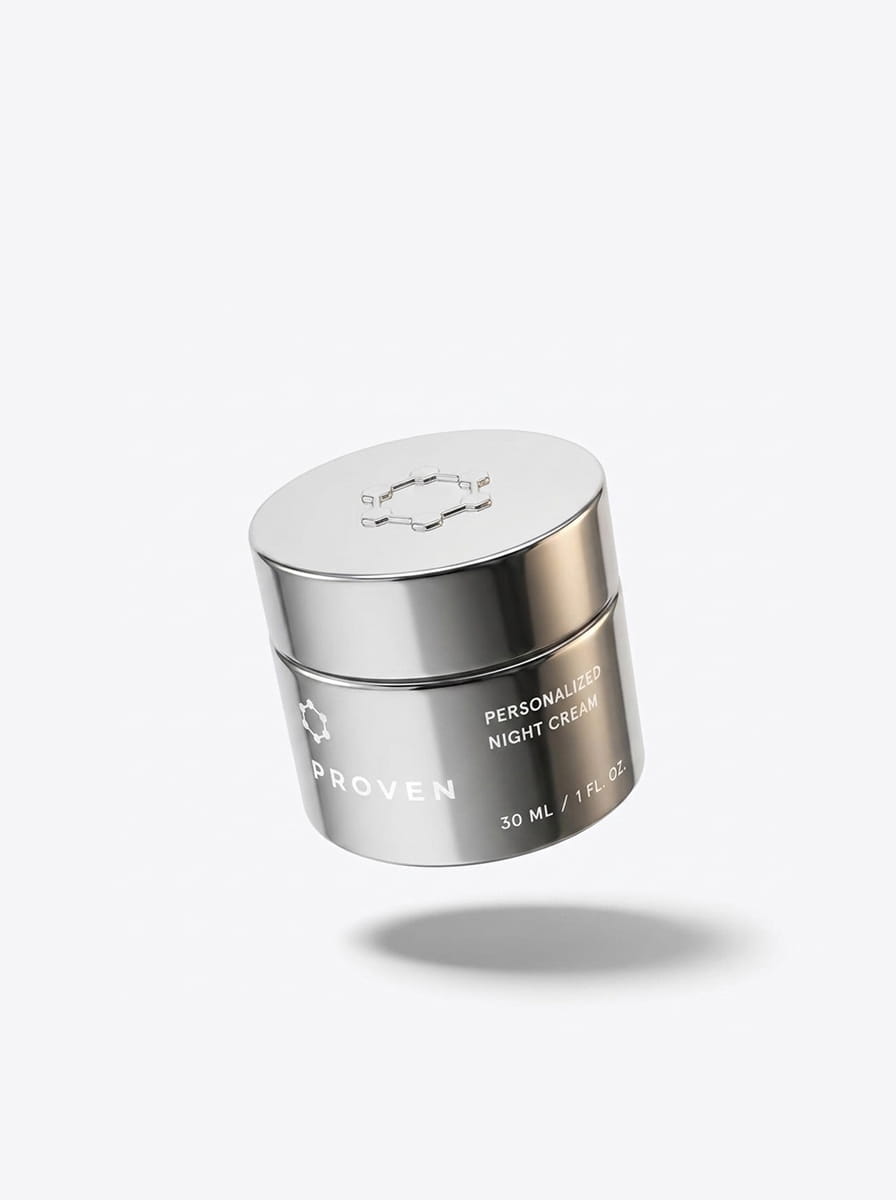
Overnight repair with the active ingredients your skin needs most.
Your formula does the heavy lifting on the uneven tone along your legs. A few habits keep new marks from forming, and the routine starts with the quiz.
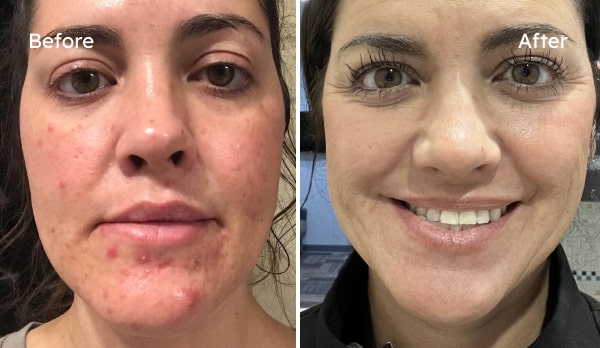
“It’s so clear and I can go without makeup and it looks amazing. I used to be so ashamed to walk around with no makeup, had terrible acne! This has been a game changer for me!”
Persistent inflammatory acne + barrier disruption = gentle sebum balance + barrier rebuild system.